
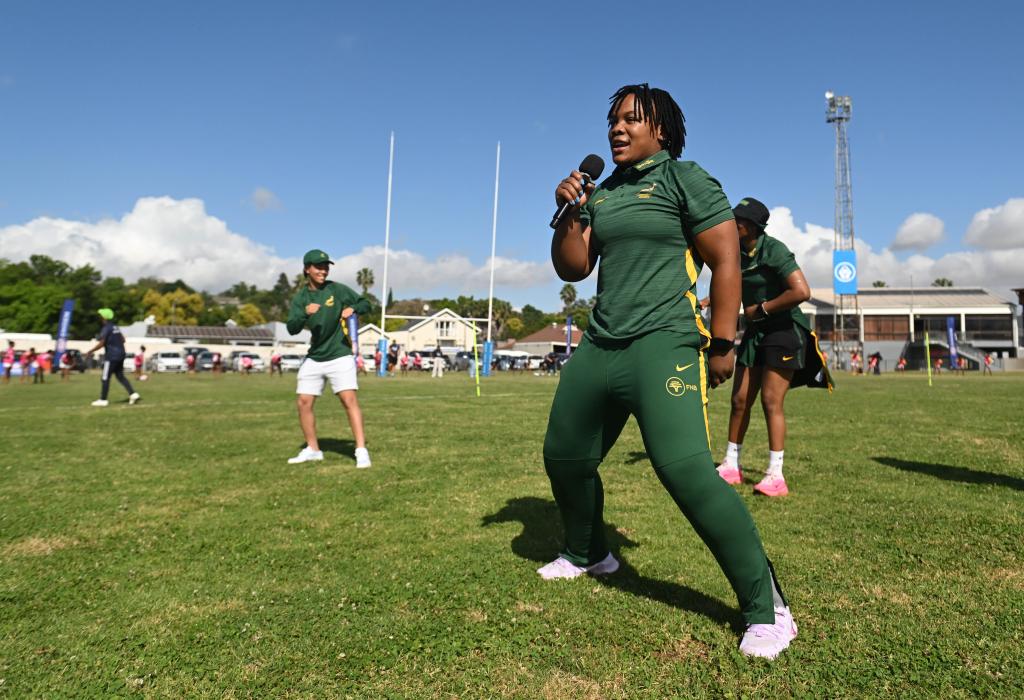
At 31, Babalwa Latsha she remains one of South Africa’s most influential players, a leader forged in scrums, not soundbites.
Latsha continues to hold a central role in South African women’s rugby as the Springbok Women navigate another demanding international cycle. The experienced forward has captained the national side since 2019 and remains one of the most capped and respected players in the squad.
Latsha made her Springbok Women debut in 2018 before being appointed captain a year later. Her leadership has coincided with a period of transition for the national team, marked by increased international exposure and a growing emphasis on high-performance structures within women’s rugby.

In 2020, Latsha reached a landmark moment in her career when she became the first African woman to sign a professional rugby contract, joining Spanish club SD Eibar RT. The move was widely regarded as a breakthrough for women’s rugby on the continent. She made an immediate impact in Spain, scoring 13 tries in seven matches, an unusual return for a forward.
She later moved to England to play for Harlequins Women in the Premier 15s, gaining experience in one of the world’s most competitive domestic leagues and further strengthening her credentials at international level.
On the Test stage, Latsha has accumulated more than 40 international caps, placing her among the most experienced players in Springbok Women’s history. She has represented South Africa in both the 15s and sevens formats, offering versatility and continuity across competitions.

Rankings and Standing
Although women’s rugby does not operate under an official global player ranking system, Latsha is consistently regarded as:
- One of the leading forwards in African women’s rugby, based on selection, caps and leadership roles.
- A senior figure within the Springbok Women leadership group, ranking among the most experienced players by international appearances.
- One of the few African women to have competed in top-tier European professional leagues, a distinction that underscores her standing in the global game.
South Africa remain among the top-ranked teams in Africa, with Latsha a regular presence in matches against higher-ranked international opposition.
As women’s rugby in South Africa continues to develop, Latsha’s role remains grounded in performance rather than profile. Her career, shaped by consistency and resilience, continues to reflect the broader evolution of the women’s game – from limited opportunities to a growing presence on the international stage.